Showing posts with label Global Warming. Show all posts

Tuesday, April 28, 2009

Tilting at Windmills: Peter Huber on Quixotic Efforts to Limit Carbon Emissions


John Mauldin's Outside the Box e-mail newsletter this week ("On Energy Production and U.S. Intelligence Failures") features two essays worth reading, especially the first one ("Bound to Burn") by Peter Huber. A few excerpts from Huber's essay follow.

Cut to the chase. We rich people can't stop the world's 5 billion poor people from burning the couple of trillion tons of cheap carbon that they have within easy reach. We can't even make any durable dent in global emissions -- because emissions from the developing world are growing too fast, because the other 80 percent of humanity desperately needs cheap energy, and because we and they are now part of the same global economy. What we can do, if we're foolish enough, is let carbon worries send our jobs and industries to their shores, making them grow even faster, and their carbon emissions faster still.

We don't control the global supply of carbon.

[...]

We no longer control the demand for carbon, either. The 5 billion poor -- the other 80 percent -- are already the main problem, not us. Collectively, they emit 20 percent more greenhouse gas than we do. We burn a lot more carbon individually, but they have a lot more children. Their fecundity has eclipsed our gluttony, and the gap is now widening fast. China, not the United States, is now the planet's largest emitter. Brazil, India, Indonesia, South Africa, and others are in hot pursuit. And these countries have all made it clear that they aren't interested in spending what money they have on low-carb diets. It is idle to argue, as some have done, that global warming can be solved -- decades hence -- at a cost of 1 to 2 percent of the global economy. Eighty percent of the global population hasn't signed on to pay more than 0 percent.

[...]

Might we instead manage to give the world something cheaper than carbon? The moon-shot law of economics says yes, of course we can. If we just put our minds to it, it will happen. Atom bomb, moon landing, ultracheap energy -- all it takes is a triumph of political will.

Really? For the very poorest, this would mean beating the price of the free rain forest that they burn down to clear land to plant a subsistence crop. For the slightly less poor, it would mean beating the price of coal used to generate electricity at under 3 cents per kilowatt-hour.

[...]

And with one important exception [nuclear power], which we will return to shortly, no carbon-free fuel or technology comes remotely close to being able to do that. Fossil fuels are extremely cheap because geological forces happen to have created large deposits of these dense forms of energy in accessible places. Find a mountain of coal, and you can just shovel gargantuan amounts of energy into the boxcars.

Shoveling wind and sun is much, much harder. Windmills are now 50-story skyscrapers. Yet one windmill generates a piddling 2 to 3 megawatts. A jumbo jet needs 100 megawatts to get off the ground; Google is building 100-megawatt server farms. Meeting New York City's total energy demand would require 13,000 of those skyscrapers spinning at top speed, which would require scattering about 50,000 of them across the state, to make sure that you always hit enough windy spots. To answer the howls of green protest that inevitably greet realistic engineering estimates like these, note that real-world systems must be able to meet peak, not average, demand; that reserve margins are essential; and that converting electric power into liquid or gaseous fuels to power the existing transportation and heating systems would entail substantial losses. What was Mayor Bloomberg thinking when he suggested that he might just tuck windmills into Manhattan? Such thoughts betray a deep ignorance about how difficult it is to get a lot of energy out of sources as thin and dilute as wind and sun.

It's often suggested that technology improvements and mass production will sharply lower the cost of wind and solar. But engineers have pursued these technologies for decades, and while costs of some components have fallen, there is no serious prospect of costs plummeting and performance soaring as they have in our laptops and cell phones. When you replace conventional with renewable energy, everything gets bigger, not smaller -- and bigger costs more, not less. Even if solar cells themselves were free, solar power would remain very expensive because of the huge structures and support systems required to extract large amounts of electricity from a source so weak that it takes hours to deliver a tan.


The second essay in this week's Outside the Box newsletter, "Torture and the U.S. Intelligence Failure", by Stratfor's George Friedman, I won't excerpt from here, as this post is long enough already, but it stands out from some of the more hysterical recent punditry on this subject in its calmly-worded survey of the subject.

The photo above, of Denmark's Middelgrunden offshore windmill farm, comes from Daylife.com. As a small, geographically compact country on the windy North Sea, Denmark may be one of the few places where wind energy can fulfill a large percentage of electricity. According to Wikipedia, wind power currently provides 19% of Denmark's electricity (the largest percentage provided by wind power anywhere). Globally, Wikipedia says that wind power fuels 1.5% of electricity use, though this number sounds a little high.

Saturday, March 28, 2009

Freeman Dyson in Tomorrow's NY Times Magazine


Tomorrow's New York Times Magazine features a cover article on the physicist Freeman Dyson, by Nicholas Dawidoff, "The Civil Heretic". The eighty five year old Dyson has led an eventful life so far, and the article covers a lot of its interesting parts. Below are a few brief excerpts of Dyson on Al Gore, James Hansen, and coal, followed by a brief note about Dyson's artistic sensibilities.

Among those he considers true believers, Dyson has been particularly dismissive of Al Gore, whom Dyson calls climate change’s “chief propagandist,” and James Hansen, the head of the NASA Goddard Institute for Space Studies in New York and an adviser to Gore’s film, “An Inconvenient Truth.” Dyson accuses them of relying too heavily on computer-generated climate models that foresee a Grand Guignol of imminent world devastation as icecaps melt, oceans rise and storms and plagues sweep the earth, and he blames the pair’s “lousy science” for “distracting public attention” from “more serious and more immediate dangers to the planet.”

[...]

For Hansen, the dark agent of the looming environmental apocalypse is carbon dioxide contained in coal smoke. Coal, he has written, “is the single greatest threat to civilization and all life on our planet.” Hansen has referred to railroad cars transporting coal as “death trains.” Dyson, on the other hand, told me in conversations and e-mail messages that “Jim Hansen’s crusade against coal overstates the harm carbon dioxide can do.” Dyson well remembers the lethal black London coal fog of his youth when, after a day of visiting the city, he would return to his hometown of Winchester with his white shirt collar turned black. Coal, Dyson says, contains “real pollutants” like soot, sulphur and nitrogen oxides, “really nasty stuff that makes people sick and looks ugly.” These are “rightly considered a moral evil,” he says, but they “can be reduced to low levels by scrubbers at an affordable cost.” He says Hansen “exploits” the toxic elements of burning coal as a way of condemning the carbon dioxide it releases, “which cannot be reduced at an affordable cost, but does not do any substantial harm.”

[...]

Dyson has great affection for coal and for one big reason: It is so inexpensive that most of the world can afford it. “There’s a lot of truth to the statement Greens are people who never had to worry about their grocery bills,” he says. (“Many of these people are my friends,” he will also tell you.) To Dyson, “the move of the populations of China and India from poverty to middle-class prosperity should be the great historic achievement of the century. Without coal it cannot happen.” That said, Dyson sees coal as the interim kindling of progress. In “roughly 50 years,” he predicts, solar energy will become cheap and abundant, and “there are many good reasons for preferring it to coal.”


The article notes in passing that Freeman Dyson disliked John Adams's opera "Dr. Atomic". That puts me in good company, I guess: I turned the PBS simulcast of this opera off after a half hour. Below is the trailer for the Metropolitan Opera's production of Dr. Atomic.

Thursday, January 15, 2009

U.S. Airways Airbus 320 Crash Lands in the Hudson


According to the AP, the plane may have been hit by birds. Unfortunately for the passengers, despite the Global Warming/Climate Change crisis, today's high temperature in the New York City area is a frigid 20°.

Thursday, November 13, 2008

Crichton on Charlie Rose

An hour long conversation with Charlie Rose from early 2007 that covers Crichton's thoughts on biotechnology, global warming, and Jasper Johns, among other topics. Charlie Rose is at his most animated when the subject turns toward global warming. When he brings up the number of scientists who agree with predictions about catastrophic global warming, Crichton mentions Einstein's response when he was told about the hundreds of German physicists who signed a letter claiming his "Jewish physics" (i.e., Relativity) was false: "It only takes one scientist to prove me wrong".

Crichton also uses analogies to investing that he also used in his "Aliens Cause Global Warming" speech, about the need for doing due diligence and of being skeptical of long range projections.

Wednesday, November 5, 2008

Michael Crichton Passes Away


Sad news, and a shock to those of us who hadn't known he had been battling cancer. The Associated Press's obituary quotes John Wells, the executive producer of the long-running TV drama Crichton created, ER, on the breadth of Crichton's interests:

"No lunch with Michael lasted less than three hours and no subject was too prosaic or obscure to attract his interest. Sexual politics, medical and scientific ethics, anthropology, archaeology, economics, astronomy, astrology, quantum physics, and molecular biology were all regular topics of conversation."


Michael Crichton's website is down now, but here is a link to the Michelin Lecture he gave at Cal Tech in 2003, reproduced on a Harvard website, "Aliens Cause Global Warming". Below are two brief excerpts from the lecture, but it's worth reading in full.

On Science and Consensus:

I want to pause here and talk about this notion of consensus, and the rise of what has been called consensus science. I regard consensus science as an extremely pernicious development that ought to be stopped cold in its tracks. Historically, the claim of consensus has been the first refuge of scoundrels; it is a way to avoid debate by claiming that the matter is already settled. Whenever you hear the consensus of scientists agrees on something or other, reach for your wallet, because you're being had.

Let's be clear: the work of science has nothing whatever to do with consensus. Consensus is the business of politics. Science, on the contrary, requires only one investigator who happens to be right, which means that he or she has results that are verifiable by reference to the real world. In science consensus is irrelevant. What is relevant is reproducible results. The greatest scientists in history are great precisely because they broke with the consensus.


On Predictions:

Let's think back to people in 1900 in, say, New York. If they worried about people in 2000, what would they worry about? Probably: Where would people get enough horses? And what would they do about all the horseshit? Horse pollution was bad in 1900, think how much worse it would be a century later, with so many more people riding horses?

But of course, within a few years, nobody rode horses except for sport.

[...]

Now. You tell me you can predict the world of 2100. Tell me it's even worth thinking about. Our models just carry the present into the future.

They're bound to be wrong. Everybody who gives a moment's thought knows it.


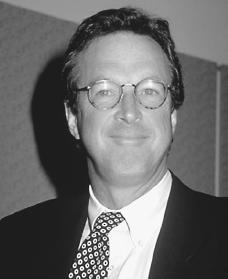
The photo of Michael Crichton above is from the Notable Biographies website.