Showing posts with label The U.S. Army. Show all posts

Tuesday, November 10, 2009

Ft. Hood


I've avoided writing about this here so far, though one comment I've made elsewhere is that the U.S. Army's policy of keeping most of its troops unarmed stateside isn't a new one. Back when I was in the Army Reserve, in the run-up to the first Gulf War, there were worries about terrorist/irregular attacks here in the U.S. We had someone from the Army's CID lecture us about being vigilant, and the Army Reserve Center started posting reservists at the main entrance, but our rifles remained locked away in an arms room in the basement.

Even so, if someone had tried to do what Maj. Hassan did in Texas last week at my unit, he would have been stopped a lot quicker: about half of the guys in the brigade were cops (mainly NYPD, plus some state troopers, sheriff's deputies, local cops, and assorted others), and most brought their police weapons to drills.

I was reminded of that a few minutes ago by seeing the photo above on Yahoo!. I wonder if the rifles set up as part of the memorial for those Ft. Hood soldiers might have felt like rubbing salt in the wound for some of the survivors and relatives of the victims. If the troops had rifles when Maj. Hassan started shooting, certainly a lot fewer of them would have gotten shot and killed.

Tuesday, August 25, 2009

Life Imitates Science Fiction, Part II

In a previous post ("Life Imitates Science Fiction"), I mentioned hearing about a new gadget that was similar to a futuristic device imagined by the science fiction writer Michael Swanwick. Today I found out about something like another one of the machines mentioned in a Swanwick book.

Swanwick's novel Stations of the Tide mentioned machines called "surrogates" -- robots, essentially, that a person could animate and control remotely. An image of the person's face would appear on the video screen the surrogate apparently had in place of a head; the person could speak, see, hear through the surrogate, and move it around as well. The link above goes to an excerpt from the beginning of the novel, where surrogates are first mentioned. In keeping with his typical M.O., Swanwick doesn't waste much exposition describing the technology, he just mentions it and lets you fill in the details on your own from the context.

See the video below, for something similar to Swanwick's surrogate: the "Chungbot", named after U.S. Army Major Kevin Chung, a physician specializing in the treatment of burns. As he explains in the video clip below (which includes some graphic footage of recovering burn victims), the robot enabled him to check in on -- and assist in the treatment of -- patients stateside while he was deployed in Iraq.

Monday, May 25, 2009

Remembering Roy Benavidez on Memorial Day


During downtime years ago, I read through a book of Medal of Honor citations. One of the most impressive ones was for Master Sergeant Roy Benavidez (pictured above), for his actions "west of Loc Ninh, Vietnam" [i.e., in Cambodia] on May 2nd, 1968. At the time, then-Staff Sergeant Benavidez was awarded the Distinguished Service Cross, reportedly because his commanding officer didn't think he'd survive long enough be be awarded a non-posthumous Medal of Honor, given the severity of Benavidez's wounds. MSG Benavidez was eventually awarded the Medal of Honor by President Reagan. Below is MSG Benavidez's Medal of Honor citation, via Valor Remembered.

On the morning of 2 May 1968, a 12 man Special Forces Reconnaissance Team was inserted by helicopters in a dense jungle area west of Loc Ninh, Vietnam to gather intelligence information about confirmed large-scale enemy activity. This area was controlled and routinely patrolled by the North Vietnamese Army. After a short period of time on the ground, the team met heavy enemy resistance, and requested emergency extraction. Three helicopters attempted extraction, but were unable to land due to intense enemy small arms and anti-aircraft fire.

Sergeant Benavidez was at the Forward Operating Base in Loc Ninh monitoring the operation by radio when these helicopters returned to off-load wounded crewmembers and to assess aircraft damage. Sergeant Benavidez voluntarily boarded a returning aircraft to assist in another extraction attempt. Realizing that all the team members were either dead or wounded and unable to move to the pickup zone, he directed the aircraft to a nearby clearing where he jumped from the hovering helicopter, and ran approximately 75 meters under withering small arms fire to the crippled team.

Prior to reaching the team's position he was wounded in his right leg, face, and head. Despite these painful injuries, he took charge, repositioning the team members and directing their fire to facilitate the landing of an extraction aircraft, and the loading of wounded and dead team members. He then threw smoke canisters to direct the aircraft to the team's position. Despite his severe wounds and under intense enemy fire, he carried and dragged half of the wounded team members to the awaiting aircraft. He then provided protective fire by running alongside the aircraft as it moved to pick up the remaining team members.

As the enemy's fire intensified, he hurried to recover the body and classified documents on the dead team leader. When he reached the leader's body, Sergeant Benavidez was severely wounded by small arms fire in the abdomen and grenade fragments in his back. At nearly the same moment, the aircraft pilot was mortally wounded, and his helicopter crashed.

Although in extremely critical condition due to his multiple wounds, Sergeant Benavidez secured the classified documents and made his way back to the wreckage, where he aided the wounded out of the overturned aircraft, and gathered the stunned survivors into a defensive perimeter. Under increasing enemy automatic weapons and grenade fire, he moved around the perimeter distributing water and ammunition to his weary men, re-instilling in them a will to live and fight.

Facing a buildup of enemy opposition with a beleaguered team, Sergeant Benavidez mustered his strength, began calling in tactical air strikes and directed the fire from supporting gun ships to suppress the enemy's fire and so permit another extraction attempt. He was wounded again in his thigh by small arms fire while administering first aid to a wounded team member just before another extraction helicopter was able to land. His indomitable spirit kept him going as he began to ferry his comrades to the craft.

On his second trip with the wounded, he was clubbed from behind by an enemy soldier. In the ensuing hand-to-hand combat, he sustained additional wounds to his head and arms before killing his adversary [with a Bowie knife]. He then continued under devastating fire to carry the wounded to the helicopter. Upon reaching the aircraft, he spotted and killed two enemy soldiers who were rushing the craft from an angle that prevented the aircraft door gunner from firing upon them. With little strength remaining, he made one last trip to the perimeter to ensure that all classified material had been collected or destroyed, and to bring in the remaining wounded. Only then, in extremely serious condition from numerous wounds and loss of blood, did he allow himself to be pulled into the extraction aircraft.

Sergeant Benavidez's gallant choice to join voluntarily his comrades who were in critical straits, to expose himself constantly to withering enemy fire, and his refusal to be stopped despite numerous severe wounds, saved the lives of at least eight men. His fearless personal leadership, tenacious devotion to duty, and extremely valorous actions in the face of overwhelming odds were in keeping with the highest traditions of the military service, and reflect the utmost credit on him and the United States Army.


The photo above, of MSG Benavidez wearing his Medal of Honor, comes from Valor Remembered.

Wednesday, May 13, 2009

English Needs Another Word


On his Atlantic blog ("The End of the Torture Debate"), Ta-Nehisi Coates appears to consider the phrase "enhanced interrogation" a euphemism for torture. In this, he isn't alone, but I'd argue that, in the absence of a word that differentiates between things such as stress positions and thumb screws, "enhanced interrogation" is a legitimate phrase. When opponents of enhanced interrogation call anything other than asking a detainee politely for information "torture", they weaken their case.

You can argue that stress positions and other forms of enhanced interrogation (e.g., sleep deprivation, etc.) shouldn't be used on detainees at all. Or you can argue that their use ought to be carefully limited. But what's the point of calling it "torture"? I was doing stress positions last night, during my Club KO class: the plank position (pictured above), wall squats, holding the up position of a push-up (what we used to call in the Army the "front-leaning rest" position), etc. It was no picnic, but I can't call myself a victim of "torture" today. We need a better word for this sort of thing, one that differentiates it from, say, the rack. I nominate "sorture", as a portmanteau of "sort of" and "torture".

The photo above, of the woman in the plank position, comes from sheride.com.

Tuesday, January 13, 2009

Mark Bowden on Desert One


The mention of Mark Bowden in the previous post ("Gaza versus Somalia") brought to mind a cover article Bowden wrote for the Atlantic in 20061 on the ill-fated mission to free the U.S. hostages in Iran, "The Desert One Debacle" (Bowden also wrote a book about the hostage crisis, "Guests of the Ayatollah"). Below is a brief excerpt from the article.

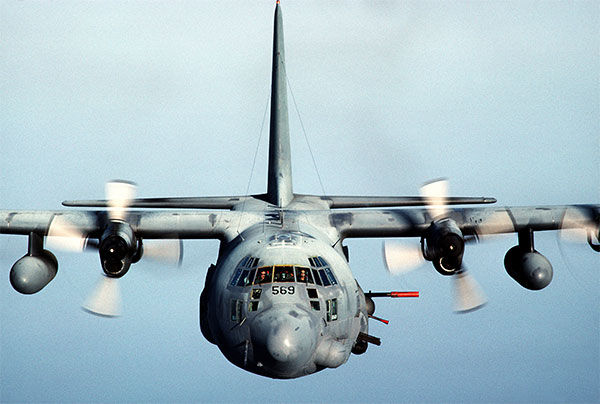
Another presidential directive concerned the use of nonlethal riot-control agents. Given that the shah’s occasionally violent riot control during the revolution was now Exhibit A in Iran’s human-rights case against the former regime and America, Carter wanted to avoid killing Iranians, so he had insisted that if a hostile crowd formed during the raid, Delta should attempt to control it without shooting people. [U.S. Army Delta Force Major Bucky] Burruss considered this ridiculous. He and his men were going to assault a guarded compound in the middle of a city of more than 5 million people, most of them presumed to be aggressively hostile. It was unbelievably risky; everyone on the mission knew there was a very good chance they would not get home alive.

Wade Ishmoto, a Delta captain who worked with the unit’s intelligence division, had joked, “The only difference between this and the Alamo is that Davy Crockett didn’t have to fight his way in.” And Carter had the idea that this vastly outnumbered force was first going to try holding off the city with nonviolent crowd control? Burruss understood the president’s thinking on this, but with their hides so nakedly on the line, shouldn’t they be free to decide how best to defend themselves? He had complained about the directive to General Jones, who had said he would look into it, but the answer had come back “No, the president insists.” So Burruss had made his own peace with it. He had with him one tear-gas grenade—one—which he intended to throw as soon as necessary; he would then use its smoke as a marker to call in devastatingly lethal 40 mm AC-130 gunship fire.


The photo above, of an AC-130 Spectre gunship, is from AmericanSpecialOps.com.


1In hindsight, 2006 was an auspicious year for The Atlantic, with articles such as this one and Matthew Stewart's article on management consulting that we mentioned in a previous post ("The Management Myth").

Gaza versus Somalia

On his Atlantic blog, Jeffrey Goldberg notes a similarity between the Israeli operation in Gaza and the American one, years ago, in Somalia ("Does 'Black Hawk Down' Portray an American War Crime"):

At least nine hundred people, maybe half of them civilians, have been killed in Gaza so far, the overwhelming majority presumably killed by Israel

[...]

This number, nine hundred, is large, and it brought to mind another conflict between a Western army and a Muslim insurgency, the one portrayed in the book and movie "Black Hawk Down." Roughly one thousand Somalis were killed by American forces over the twenty hours or so of the First Battle of Mogadishu (eighteen American soldiers, of course, were also killed).

I couldn't get an accurate read on how many of those Somalis were civilians, so I called my colleague, Mark Bowden, who wrote the book ["Black Hawk Down"1, 2]. He said that eighty percent of the Somali deaths were of civilians.


Goldberg goes on to quote Bowden directly. Here's an excerpt of Bowden on the nature of the sort of asymmetric warfare conducted in Somalia in the early 1990s and in Gaza now:

"If you feel the need to go to war against an enemy that is not as powerful as you are, one of the tactics of the weaker party is to hide among civilians, and use the global media to advertise the horror of the onslaught. People on the receiving end of the bombs greatly exaggerate the casualties and get photographers to take the most gruesome of pictures, and at the same time, the people in charge of the stronger power try to minimize the number of casualties. If you live in a democracy, then public opinion really matters, and reports of dead children swells the criticism of the war. If you live in a dictatorship, then you don't care what the people think."

[...]

"The parallel with Mogadishu is that gunmen in that battle hid behind walls of civilians and were aware of the restraint of the (Army) Rangers. These gunmen literally shot over the heads of civilians, or between their legs. They used women and children for this. It's mind-boggling. Some of the Rangers shot civilians, some of them inadvertently and some of them advertently. They made the choice to shoot at crowds. When a ten-year-old is running at your vehicle with an AK-47, do you shoot the kid? Yes, you shoot the kid. You have to survive. When push comes to shove, faced with the horrible dilemma with a gunman facing you, yes, you shoot. It's not just a choice about your own life. If you don't shoot, you're saying that your mission isn't important, and the lives of your fellow soldiers aren't important."


One might point out that the U.S. involvement in Somalia started out as a humanitarian one, but, as Bowden noted in his book, the mission evolved into a war against one of Somalia's main clans.


1Mark Bowden's book "Blackhawk Down" was masterly. He gathered information from essentially every available source (e.g., transcripts of U.S. military radio traffic, interviews with local Somalis, etc.) and reconstructed the battle, the events leading up to it, its aftermath. Bowden also placed the events in their larger context, all the while making "Blackhawk Down" a page-turner. He's a first rate journalist.

2Ridley Scott's 2001 movie adapted from Bowden's book, "Blackhawk Down", featured a number of actors who went on to become much more prominent over the next several years: Ewan McGregor, Josh Hartnett, Eric Bana, Jeremy Piven, Jason Isaacs, and Orlando Bloom.

Monday, September 15, 2008

Sunday Night Excitement


We went to see the pre-hipster rock band The Cult play at Irving Plaza Sunday night with another couple, and, since this was a fairly older crowd1, I figured it would be a mellow one as well. Not so. Maybe it was the unseasonably hot and humid weather for a mid-September evening in New York, or maybe it was because the place was packed to the gills (the show was originally scheduled for the larger Roseland Ballroom), but from the upper level we saw a couple of fights on the floor, and, separately, a couple of juiced-up fellows close to the stage get bodily ejected. When the lead singer of a rock band stops what he's doing to single you ought and tell you to tone it down, that's a good indication you've gone too far. That was the case with one of the fellows who was shown the door. In any case, a good show, even if Ian Astbury chopped off some of his lyrics. Worth catching if you are into pre-hipster rock.

1To give a sense of how long this band has been around (and to date myself in the process), the first time I heard The Cult's music was on a barracks-mate's smuggled Sony Walkman during infantry training at Fort Benning, GA in 1989. The album I heard (on a cassette tape, no less) was The Cult's third album in their then-current incarnation. So it's likely that many of the folks at the show tonight first started listening to the band in the early 80s and were older than me.