
As the security situation in Iraq has stabilized, and economic issues have dominated the news, Iraq has gotten less attention recently in the media. Yesterday was an exception, as the New York Times reported that the Iraqi government's cabinet had approved a status of forces agreement with the U.S. ("Pact, Approved in Iraq, Sets Time for U.S. Pullout"). The photo above, of Iraqi policemen celebrating with an American soldier, is from the article. According to iCasualties.org, U.S. military casualties, Iraqi security force casualties, and Iraqi civilian casualties have all dropped significantly over the last year.
Before the security situation in Iraq had stabilized to this level, casualties across the board were much higher and most of the U.S. casualties were caused by improvised explosive devices (IEDs). The Defense Department formed an anti-IED task force and threw money, resources, and personnel into it to deal with the problem. Last year, the Washington Post published an excellent four-part series on this effort ("Left of Boom: The Struggle to Defeat Roadside Bombs"). The phrase "Left of the boom" refers to efforts to disrupt the IED enterprise before the bombs were planted -- tracking down IED makers, ambushing IED planters, etc. No short summary will do that series justice, but one point it made dealt with the limitations of technology in dealing the problem. New technologies did help ameliorate the situation, but there were no panaceas, and many of the more effective approaches weren't technological in nature. For example, the last article in the series noted,
The "Mark 1 Human Eyeball," as troops sardonically call it, is more adept at finding IEDs than any machine. Studies to determine which soldiers made the best bomb spotters found that "it's those who hunted and fished and were much closer to their environment," an Army scientist reported.
[...]
Other unconventional initiatives include "human terrain teams," made up of anthropologists, social scientists and sundry experts who advise brigade commanders on tribal structure, local customs and cultural nuances. A preliminary assessment last month of an HTT in eastern Afghanistan concluded that the team had "a profound effect" in reducing "kinetic operations" -- gunplay -- and had even discerned that a local village would help stop Taliban rocket attacks against U.S. troops in exchange for a volleyball net.
More broadly, the successful (so far) counterinsurgency efforts in Iraq, although aided by technology (e.g., hand held fingerprint scanners, reconnaissance drones, etc.) have relied more on 'left of boom' approaches that are attuned to local politics (for detail and insight on this, see, for example, David Kilcullen's posts on the Small Wars Journal blog. Dr. Kilcullen, a retired Australian army officer and counterinsurgency scholar, has served as a counterinsurgency adviser to the U.S. in Iraq and Afghanistan).
What brought this to mind recently -- the frequent lack of technological panaceas to complex real world problems -- was a column by Thomas Friedman last week about Detroit in the New York Times ("How to Fix a Flat"). In that column, Friedman wrote,
Any car company that gets taxpayer money must demonstrate a plan for transforming every vehicle in its fleet to a hybrid-electric engine with flex-fuel capability, so its entire fleet can also run on next generation cellulosic ethanol.
Lastly, somebody ought to call Steve Jobs, who doesn’t need to be bribed to do innovation, and ask him if he’d like to do national service and run a car company for a year. I’d bet it wouldn’t take him much longer than that to come up with the G.M. iCar.
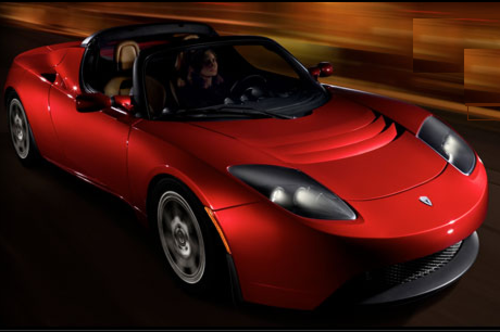
Friedman, before he became sought after as an expert on energy policy, was better known as an expert on the Middle East (he was for the war in Iraq before he was against it). Here though he seems to underestimate the technological challenges in designing an innovative new car (see, for example, "Tesla's Wild Ride"), and not acknowledge the extent to which Detroit's problems are political and not technological, i.e., being trapped between the Scylla of UAW labor costs of $73 per hour and the Charybdis of federal CAFE regulations that require automakers to build small cars that don't have the profit margins to make up for the high labor costs1.
1Friedman does note in passing the Big Three's high labor and health care costs but quotes an environmental lobbyist asking why GM didn't lobby for Hillary Clinton's proposal for nationalized health care. How that would have assuaged GM's retirees, who were already eligible for a national health program (Medicare) when they reached age 65, but preferred the more generous plan their union had negotiated, he doesn't ask.



 Posts
Posts

