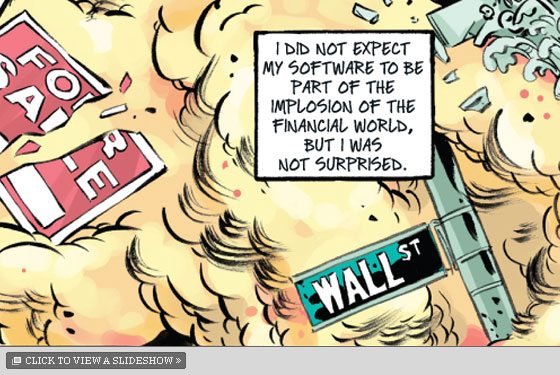
In New York Magazine, Michael Osinsky, the creator of a software program that facilitated mortgage securitization, looks back on his career, "My Manhattan Project: How I helped build the bomb that blew up Wall Street." (Hat Tip: Real Clear Markets). An interesting read, though the title overstates the case. This excerpt from the piece is closer to the mark:
The packaging of heterogeneous home mortgages into uniform securities that can be accurately priced and exchanged has been singled out by many critics as one of the root causes of the mess we’re in. I don’t completely disagree. But in my view, and of course I’m inescapably biased, there’s nothing inherently flawed about securitization. Done correctly and conservatively, it increases the efficiency with which banks can loan money and tailor risks to the needs of investors. Once upon a time, this seemed like a very good idea, and it might well again, provided banks don’t resume writing mortgages to people who can’t afford them.
Osinksy is right that there's nothing inherently wrong with securitization, and critics of the packaging of heterogeneous mortgages are right too. A security created from a pool of homogeneous mortgages -- say, $200k 30 year fixed rate mortgages with loan-to-value ratios of 80% and borrower credit scores of 720+ -- wouldn't be inherently flawed. It would also be a lot easier for investors to price.
The image above is from the New York Magazine article.


 Posts
Posts

