Showing posts with label KSW. Show all posts

Wednesday, September 23, 2009

KSW Claws Back


Long time readers may recall that we noted that shares of KSW Mechanical Services (Nasdaq: KSW), Inc. plummeted last December when two projects comprising about 40% of its backlog were put on hold in the same week. On Monday, KSW announced that the larger of those two projects has been resumed.

Readers may also recall this post from March, where we noted that KSW's corporate counsel Jim Oliviero mentioned the company was competing for a World Trade Center project. Yesterday, the company announced it had been awarded this contract. The company predicted in its press release that its backlog would total $129 million as of the end of this quarter. Before the drop last December, the company's backlog totaled $139 million.

Wednesday, May 6, 2009

KSW Reports Q1 Earnings


From the company's press release, after today's close ("KSW, Inc. Reports First Quarter 2009 Results"):

LONG ISLAND CITY, N.Y.--(BUSINESS WIRE)--KSW, Inc. (NASDAQ: KSW - News) today reported financial results for the first quarter of 2009.

Total revenue for the first quarter of 2009 was $19,706,000 as compared to $20,491,000 for the first quarter of 2008. Net income was $287,000 for the first quarter of 2009 as compared to net income of $840,000 for the first quarter of 2008. This represents earnings per share of $.05 per share (basic and diluted), for the first quarter of 2009 as compared to an earnings per share of $0.13 per share (basic and diluted), for the first quarter of 2008.

As of March 31, 2009, the Company’s backlog was approximately $38,300,000, which does not include the Mt. Sinai Center for Science & Medicine Project, which is currently estimated to have a value between $58 and $61 million. KSW has been notified that the Owner has approved the Company as the trade manager for the construction phase of the project. However, the final contract value has yet to be determined and contract documents have not yet been executed. The March 31, 2009 backlog also does not include two upper west side contracts, which were terminated by the Owner in March 2009. The Company, with the help of union concessions, was able to negotiate new agreements for the completion of those two projects[1].

Chairman of the Board, Floyd Warkol, commented: “Our first quarter revenue and income were impacted by the economic recession and credit crunch, which directly resulted in the cancellation of several large projects. However, our cash position remains strong, and we have aggressively begun bidding on public sector work, where opportunities for new work should expand under the Federal Government’s stimulus program.”


I'll be interested in seeing what the company's balance sheet looks like when it files its 10-Q for the first quarter.

[1]The press release doesn't offer a dollar amount for these two UWS projects, but I wonder if this is the $8.5 million in business KSW corporate counsel Jim Oliviero mentioned in our previous conversation, which we noted in a post at the end of March (KSW Update):

$8.5 million of [the backlog] was terminated by a developer. Oliviero explained that the developer was attempting to negotiate lower costs with the unions, and KSW was hopeful about getting the project back on the backlog if that can be done.


I left a voice mail with Oliviero today and will ask him this if I hear back from him tomorrow.

Friday, March 27, 2009

KSW Update


I spoke with Jim Oliviero today, the corporate counsel for KSW, Inc. (Nasdaq: KSW), to get some clarification on a couple of items in the 10-K the company filed earlier this week. The first item was the company's backlog. The company had a backlog of $62.5 million as of December 31st, but between then and March 6th, $8.5 million of it was terminated by a developer. Oliviero explained that the developer was attempting to negotiate lower costs with the unions, and KSW was hopeful about getting the project back on the backlog if that can be done. Another $9 million of the backlog won't be recognized as revenue until next year, as the projects its associated with won't be completed until then. So the backlog at this point represents about $45 million in potential revenue for 2009 (assuming no other projects are delayed or canceled). Revenues in 2008 were about $93 million.

I also asked Oliviero about this note on the 10-K:

In addition, at December 31, 2008, the Company held marketable securities totaling $1,223,000, a decrease from the $1,892,000 balance at December 31, 2007.


Often "marketable securities" refers to Treasuries, but in this case it refers to equity mutual funds, marked down to their value as of the end of last year. In addition, the company had cash and cash equivalents totaling $16,611,000 at the end of last year, so, given the company's current market cap of $14,840,000 it's trading for less than its cash.

Tuesday, March 10, 2009

KSW Update

Yesterday KSW, Inc. (Nasdaq: KSW) filed an 8-k and issued a press release regarding its 2008 results, "KSW Reports Record 2008 Profits and Revenue". Excerpt:

Net income for 2008 increased by 16% to $4,239,000, or $.68 per share (basic) and $.67 per share (diluted), compared to 2007 net income of $3,662,000, or $.59 per share (basic and diluted).

Revenues in 2008 increased by 20% to $93,027,000, as compared to $77,266,000 in 2007.

As of December 31, 2008, the Company’s backlog was approximately $62,500,000.


The release didn't break out 4Q numbers, but after backing out the previous three quarters' earnings I get earnings of $1,004,000 or about 16 cents per share for 4Q 2008, a sequential drop from 3Q's $1.3 million in earnings.

I spoke with KSW's corporate counsel Jim Oliviero today. He said that the company was focusing more on government work and hoped to position itself to benefit from some of President Obama's stimulus money. He said that KSW was going to bid on two government projects this spring -- a pollution plant in Queens and a part of the Port Authority's new World Trade Center. The value of the Queens contract would be about $40 million, and the value of the WTC project is estimated at between $25 million and $60 million. KSW should know by the end of April whether it wins either of those projects.

I also asked Oliviero about the long-anticipated Second Avenue subway project currently under construction in Manhattan. He said that at this state of the project (tunnel boring) there isn't much role for an HVAC contractor, but KSW would consider bidding on the construction of the stations when the project gets to that point.

Based on the current share price of $2.05 and 3Q balance sheet data, KSW is currently trading for about a third less than its net cash (the 10-k showing year-end balance sheet data should be filed within a couple of weeks).

Sunday, January 11, 2009

Perritt's Annual Reports

Last week I received the hard copy of the annual reports for Perritt's MicroCap Opportunities Fund (maximum market cap $750 million) and its Emerging Opportunities Fund (maximum market cap $350 million), dated October 31st, 2008. Perritt tends to own a lot of stocks in its funds (~100 names), but the annual reports highlighted a few representative ideas. Below are two of them.

From the MicroCap Opportunity Fund:

Northwest Pipe is a leader in the manufacturing of high-pressure steel pipe used in water infrastructure applications including wastewater, hydro-electric power and drinking water systems. The company currently has $235 million in backlog, and earnings have grown in excess of 30 percent annually during the past five years. The growth driver for the company is the need to update water infrastructure in this country. Many of the nation’s current water pipes are made of cast-iron and were installed over a century ago. A ruptured water pipe costs far more to replace than a scheduled pipe replacement.


The Perritt annual report listed the market cap for Northwest Pipe (Nasdaq: NWPX) at $235 million, as of 10/31/08. At Friday's close it was about $383 million, presumably buoyed by expectations of infrastructure spending by the incoming Obama administration.

The annual report for the Emerging Opportunities Fund listed two groups of representative stocks, a "value" group representing stocks trading for less than their liquidation values, and a "growth" group listing attractively valued growth stocks. Below was one of the representative stocks from the growth group:

KSW, Inc. (KSW) furnishes and installs heating, ventilating, and air conditioning (HVAC) systems and process piping systems primarily in New York. The company is benefiting from a strong maintenance and replacement cycle related to the commercial building boom of the late 1970s and early 1980s. This growth in maintenance and replacement revenue is offsetting the decline in multi-unit residential revenues. In the third quarter of 2008 the company reported revenue and earnings growth in excess of 20% and 30%, respectively. The company’s fully financed backlog is currently $141 million not including two large hospital projects announced in October 2008.


Again, that was as of 10/31/08. As of Friday's close, KSW, Inc. (Nasdaq: KSW) had a negative enterprise value, so it would presumably fit in Perritt's value category today.

Saturday, December 20, 2008

A Rough Week for KSW


On Monday, shares of HVAC contractor KSW, Inc. (Nasdaq: KSW) dropped from $4.40 to $3.88. The next day, KSW filed an 8-k stating that the 56 Leonard Street Project in downtown Manhattan, the HVAC contract on which was worth $24 million, had been put on hold by the developer (judging from Monday's price action, someone got the memo early).

On Thursday, KSW released another 8-k stating that another project, this one on 42nd Street and 10th Avenue in Manhattan, was being delayed by the developer, who is seeking a redesign to reduce construction costs, and plans to restart the project within three months. The HVAC contract for this project is approximately $32 million. So within a few days, about $56 million of KSW's previously reported backlog of approximately $139 million was put on hold. It appears that the $32 million contract might get reduced somewhat, but that project could be back online in a few months; the $24 million contract appears to be on hold indefinitely.

In the wake of these two negative 8-ks, KSW shares traded as low as $1.79 on Friday, despite the company having no debt and a little over $3 per share in cash. Late Friday, the company released a press release announcing that its board had authorized a share buyback of $1 million, adding that,

“We will retain the repurchased shares as treasury stock,” said Floyd Warkol, Chairman and CEO of KSW, Inc. “We believe that the market’s response to our latest filings is unwarranted based upon the Company’s financial condition and standing in the industry.”


KSW shares recovered somewhat to close at $3.10 after hours.

Had I been following this in real time on Friday, I would have been a buyer when KSW traded below net cash. The near-term outlook for residential and commercial real estate in Manhattan is grim, but the company also does work in sectors that are less economically sensitive (e.g., hospitals, schools, court houses, etc.), and as I noted in a previous post (KSW Update),

The company also could be positioned to benefit if a new economic stimulus package includes funds for local infrastructure projects, since KSW's CEO sits on the Metropolitan Transportation Authority's Blue Ribbon Panel on Construction Excellence which provides "guidance to the MTA as it pursues its ambitious capital construction program" and the New York City Department of Environmental Protection's Blue Ribbon Panel on Construction Costs, which provides "guidance to the DEP on its capital construction program."


The image above, via Luxury Insider is a rendering of the 56 Leonard Street building designed by the Swiss architects Herzog & de Meuron, the same firm that designed the "Bird's Nest" stadium in Beijing. Condos at 56 Leonard were to range in price from $3.5 million to $30 million. There's obviously less demand in that price range now, given the ongoing effects of the deleveraging process on Wall Street.

Monday, December 8, 2008

A Note on KSW


In a post at the end of October ("KSW Update"), I mentioned that the company's general counsel, Jim Oliviero, had mentioned to me that KSW (Nasdaq: KSW) was still keeping an eye out for potential acquisitions. I had that post in mind when I learned recently about a small HVAC company on sale through a business broker. After speaking with the broker, I called Mr. Oliviero last Friday to see if KSW was still exploring potential acquisitions. Oliviero said KSW is not looking for acquisitions right now, and instead, given the uncertainty stemming from the financial crisis, is holding onto its cash, which increases its ability to get bonded for new projects.

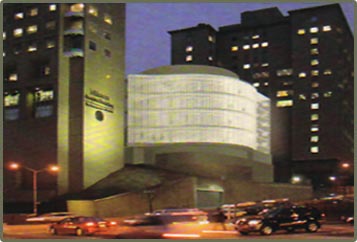
The image above, of one of KSW's current projects, the cardiovascular center at New York Presbyterian Hospital, is from KSW's website.

Monday, November 3, 2008

KSW Reports


In a recent post ("KSW Update"), we noted that KSW (Nasdaq: KSW) announced it had been awarded a new contract worth between $24 million and $25 million, but that its backlog remained unchanged at $139 million. Today KSW reported that its third quarter revenue was $25.5 million, which explains why the company's backlog remained unchanged: it worked off about as much of its backlog as it added to it. Below are the highlights from KSW's release:

Financial Highlights for the quarter ended September 30, 2008 include:

* Total revenue increased by 21.4% in third quarter 2008 to $25.53 million as compared to $21.03 million in third quarter 2007;
* Net income in third quarter 2008 increased by 36.9%, to $1.32 million, or $0.21 per basic and fully diluted shares, up from $964,000, or $0.16 per basic and $0.15 fully diluted shares in the same period of the prior year;
* As of September 30, 2008, cash, cash equivalents and marketable equity securities totaled $18.96 million;
* The Company is debt-free.

[...]

Chairman of the Board Floyd Warkol commented, “We have been careful to ensure that we have a reserve of cash and cash equivalents, which is the safest way to weather the current economic crisis. Even in harsh economic times, KSW’s ability to save owners money makes us better positioned than other contractors.”

KSW currently has over 20 projects underway in New York City, including the Trump International Hotel and Tower in Manhattan’s Soho area, the 52-story luxury rental and hotel building at 839 Sixth Avenue in Manhattan, an ultra-luxury residential tower at 56 Leonard Street, and the New York Presbyterian Hospital’s Cardiovascular Center in upper Manhattan. KSW has also been selected as the HVAC Trade Manager for pre-construction services on three new hospital projects.


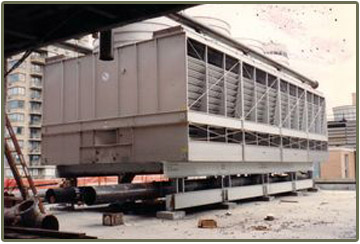
The image above comes from Completed Projects -- Hospitals/Research section of KSW's website.

Thursday, October 23, 2008

KSW Update

Earlier this week, KSW, Inc. (Nasdaq: KSW), a New York City-based HVAC contractor we've discussed in previous posts (e.g., "KSW Reports") announced that it had been awarded a new project worth between $24 million and $25 million (Press Release: "KSW, Inc. Awarded Contract for Downtown Luxury Building"). The press release noted that,

With this new project, KSW’s backlog remains at approximately 139 million dollars, which does not include the construction costs on projects where the Company is providing pre-construction services.


I spoke to KSW's general counsel, Jim Oliviero, this morning to clarify why the backlog remained unchanged. He said that KSW hadn't had any cancellations in its backlog, but had worked off some of the backlog since last quarter. Oliviero also reiterated that the company is keeping an eye out for potential acquisitions.

At yesterday's closing price of $4.62 per share, KSW was trading at 7.61x its trailing twelve months' earnings. The company has a market cap of about $29 million with $18 million in cash and no long term debt, and its current backlog is about 1.7x its revenue over the last twelve months. KSW may be adversely affected if the economic slowdown hits the NYC construction market, but its balance sheet and backlog could help it get through a lean period.

The company also could be positioned to benefit if a new economic stimulus package includes funds for local infrastructure projects, since KSW's CEO sits on the Metropolitan Transportation Authority's Blue Ribbon Panel on Construction Excellence which provides "guidance to the MTA as it pursues its ambitious capital construction program" and the New York City Department of Environmental Protection's Blue Ribbon Panel on Construction Costs, which provides "guidance to the DEP on its capital construction program."

Monday, August 4, 2008

KSW Reports

KSW, Inc. (Nasdaq1: KSW) is the HVAC contractor we discussed in a recent post ("Revisiting Return on Invested Capital" -- see also the comments, which include color from KSW's CFO and corporate counsel). Today it reported a solid second quarter. From the company's release:

Financial Highlights for the quarter ended June 30, 2008 include:

Financial Highlights for the quarter ended June 30, 2008 include:

* Total revenue increased 13.9% in second quarter 2008 to $22 million as compared to $19.3 million in second quarter 2007;

* Net income in second quarter 2008 was $1.1 million, or $0.17 per basic and fully diluted shares, up from $860,000, or $0.14 per basic and fully diluted shares in the same period of the prior year;

* Backlog set a record at $139.1 million as of June 30, 2008;

* As of June 30, 2008, cash, cash equivalents and marketable equity securities totaled $17.9 million;

* On April 30, 2008, the Company’s Board of Directors declared a cash dividend of 20 cents per share. The aggregate amount of the dividend was $1.26 million, and was paid on June 17, 2008 to shareholders of record as of May 26, 2008.

Financial Highlights for the six months ended June 30, 2008 include:

* Total revenues increased by $5.2 million, or 13.9%, to $42.5 million, as compared to $37.3 million for the six months ended June 30, 2007;

* Net income rose to $1.9 million, or $0.31 per share-basic and $0.30 per share-diluted, as compared to net income of $1.76 million, or $0.29 per share-basic and $0.28 per share-diluted for the six months ended June 30, 2007;

* Since January 1, 2008, KSW has been awarded $70 million in new contracts.


KSW is one of the companies I had in mind when I wrote this recent post, "Why Worry About Small, Thinly-Traded Stocks?", particularly the part where I questioned the conventional wisdom about risk (i.e., large is less risky than small, etc.). KSW may be a micro cap, but it seems to have a lot less risk than many much larger companies. This is a $31 million market cap company with no debt and nearly $18 million in cash, and a backlog of business about 1.75x its revenue over the last twelve months. As with many companies, KSW's business can be vulnerable to weakness in the overall economy, but the size of its backlog -- and the amount it increased by in the first half of this year -- are encouraging. Other risks plaguing many larger companies don't affect KSW directly. Since it isn't a consumer business, the weakness of the U.S. consumer doesn't affect it directly; since it is self-financing (KSW's general counsel mentioned to me on Friday that the company has never borrowed money), it isn't affected directly by the credit crisis2, etc.

After cash and stock dividends over the last year and a half, my average cost on KSW is about $5.80 per share, so I'm down on this one, but I am content to hold it.

1KSW recently switched its listing to the Nasdaq from the American Stock Exchange, and was allowed to keep its three-letter symbol.

2Of course, the credit crunch can of course affect KSW indirectly, if a lack of financing prevents its clients from initiating construction projects. So far, thankfully, that hasn't been the case.

Thursday, July 31, 2008

Revisiting Return on Invested Capital

As I mentioned in an earlier post ("From Joel Greenblatt to Jim Rogers, Part I: The Magic Formula"), Return on Invested Capital (ROIC) is one of the two metrics that comprise Joel Greenblatt's Magic Formula.

A question raised on the Magic Formula Investing Yahoo! Message Board led to a discussion that highlighted the limitations of this metric. The question was why KSW, Inc. (Nasdaq: KSW), a micro cap HVAC contractor, was no longer on the Magic Formula list. One of the message board's moderators, Marsh Gerda (who also writes an MFI Diary blog) and I separately calculated the Magic Formula metrics to see if we could figure out why the company was no longer on the list.

Greenblatt's Formula for ROIC


Recall from the previous post on this that Greenblatt's formula for ROIC is EBIT1/(Net Working Capital + Net Fixed Assets).

My ROIC Calculation for KSW


KSW is a $29.4 million market cap company with no debt and $17.75 million in net cash on its balance sheet. Using the standard definition of Net Working Capital (Current Assets - Current Liabilities), I got an ROIC of 38% for KSW. Using that standard definition of Net Working Capital made intuitive sense to me, because it put KSW's excess cash in the denominator of the ROIC formula, so holding so much excess cash reduced the company's return on invested capital.

Marsh Gerda's ROIC Calculation for KSW

Marsh Gerda used Greenblatt's more idiosyncratic definition of Net Working Capital, which excludes a company's excess cash, to calculate KSW's ROIC. He got an ROIC of 1757% for KSW. It appears that he calculated this the right way (with respect to the Magic Formula method) and I calculated it the wrong way, by ignoring Greenblatt's different definition of Net Working Capital.

What The Numbers Mean


Theoretically, an ROIC of 1757% means that, for every additional dollar of capital a company invests in its business, it can earn $17.57 in earnings. In reality, of course, there are a couple of problems with this. First, if a company could really earn 1757% on its cash by investing that in its business, it wouldn't be holding most of its market cap in cash, where, presumably, it is earning less than 4% in annual interest. This would be a problem using my calculation of ROIC as well: 38% may be a lot less than 1757%, but it's still almost an order of magnitude more than the company can earn on its cash.

The second problem is that the amount of capital KSW can profitably reinvest in its business appears to be limited, for a few reasons:

- As an HVAC contractor, it requires little tangible capital, so it can't simply spend a lot of additional capital on new plant and equipment.
- Theoretically, it could use additional capital to expand into other cities (most of KSW's business is in NYC), but the commercial construction business is highly local: a contractor needs relationships with local developers, politicians, etc. (KSW could perhaps get around this by acquiring an HVAC contractor in a different city, but it may not have enough information about that city's construction industry to be an intelligent buyer, and it may not have enough cash to make a suitable acquisition).
- As a construction contractor, KSW probably has to pay up front for supplies and labor before it gets paid on a project. It make sense for the company to hold a certain amount of cash to cover these upfront costs, particularly when credit is less available, and more expensive (especially the sort of construction factoring the company would likely have to rely on).

Similar real-world constraints prevent other companies with theoretically high returns on invested capital from reinvesting most of their cash in their respective businesses. This frequent inability of profitable companies to invest most of their excess cash in their core businesses leads in some cases to the companies returning that cash to shareholders, via dividends or buybacks, and in other cases, to spending that cash on acquisitions (sometimes of businesses that are less profitable than the acquiring company's core business).

1Earnings before Interest and Taxes