Showing posts with label Real Estate Bust. Show all posts

Monday, February 2, 2009

The Pain in Spain


The Times of London reports that, as the unemployment rate has reached 14.4% in Spain in the wake of the real estate bust there, more housewives are turning toward prostitution to make ends meet ("Few jobs and little hope as Spain faces growing crisis" -- Hat tip, Matthew Yglesias). In his post on this on his Think Progress blog, Yglesias notes that, in pre-Euro recessions, Spain had the option of devaluing its currency, which would stimulate its economy by making Spanish exports more attractive. An article by Edward Chancellor in today's Financial Times elaborates on the role the Euro is playing in the current crisis ("EMU on the rocks and all exits closed"). Below are a few excerpts from it.

The euro was created to bring economic stability to Europe. However, the politicians who promoted European Monetary Union ignored inherent flaws in the project. The credit crisis has exposed these flaws. As a result, a number of the weaker eurozone members are facing severe deflation and a quite desperate economic outlook.

The leading European politicians behind the euro project, such as former French president Francois Mitterrand, weren’t much interested in economics. In a new book, The Euro: The Politics of the New Global Currency (Yale) David Marsh shows how these politicians brushed aside the concerns of their advisers as they rushed eagerly towards monetary union. Mr Mitterrand’s vision for the single currency, says Mr Marsh, was “based on emotion, psychology and wishful thinking” rather than rational economics.

It was hoped that the euro would bring faster and more stable economic growth, while exporting Germany’s record of price stability to other members of the single currency. But many potential economic problems with European Monetary Union were identified decades ago. In 1973 Derek Mitchell, a British Treasury official, observed that the loss of exchange rate flexibility would remove a simple method for rectifying imbalances between Europe’s economies. Without the option of exchange rate depreciation, once imbalances appeared “equilibrium could only then be restored”, declared Mr Mitchell, “by inflation in the ‘high performance’ countries and unemployment and stagnation in the ‘low performance’ countries, unless central provision is made for the imbalances to be offset by massive and speedy resource transfers”.


It's worth reading the rest of Chancellor's article. He goes on to argue that the euro is playing a similarly deflationary role today as the gold standard did in the 1930s, but that it would be more difficult for euro-zone countries to extricate themselves from the euro than it was to drop the gold standard.

The photo above, of the Spanish royal family in better times, comes from King Juan Carlos's website.

Saturday, December 20, 2008

A Rough Week for KSW


On Monday, shares of HVAC contractor KSW, Inc. (Nasdaq: KSW) dropped from $4.40 to $3.88. The next day, KSW filed an 8-k stating that the 56 Leonard Street Project in downtown Manhattan, the HVAC contract on which was worth $24 million, had been put on hold by the developer (judging from Monday's price action, someone got the memo early).

On Thursday, KSW released another 8-k stating that another project, this one on 42nd Street and 10th Avenue in Manhattan, was being delayed by the developer, who is seeking a redesign to reduce construction costs, and plans to restart the project within three months. The HVAC contract for this project is approximately $32 million. So within a few days, about $56 million of KSW's previously reported backlog of approximately $139 million was put on hold. It appears that the $32 million contract might get reduced somewhat, but that project could be back online in a few months; the $24 million contract appears to be on hold indefinitely.

In the wake of these two negative 8-ks, KSW shares traded as low as $1.79 on Friday, despite the company having no debt and a little over $3 per share in cash. Late Friday, the company released a press release announcing that its board had authorized a share buyback of $1 million, adding that,

“We will retain the repurchased shares as treasury stock,” said Floyd Warkol, Chairman and CEO of KSW, Inc. “We believe that the market’s response to our latest filings is unwarranted based upon the Company’s financial condition and standing in the industry.”


KSW shares recovered somewhat to close at $3.10 after hours.

Had I been following this in real time on Friday, I would have been a buyer when KSW traded below net cash. The near-term outlook for residential and commercial real estate in Manhattan is grim, but the company also does work in sectors that are less economically sensitive (e.g., hospitals, schools, court houses, etc.), and as I noted in a previous post (KSW Update),

The company also could be positioned to benefit if a new economic stimulus package includes funds for local infrastructure projects, since KSW's CEO sits on the Metropolitan Transportation Authority's Blue Ribbon Panel on Construction Excellence which provides "guidance to the MTA as it pursues its ambitious capital construction program" and the New York City Department of Environmental Protection's Blue Ribbon Panel on Construction Costs, which provides "guidance to the DEP on its capital construction program."


The image above, via Luxury Insider is a rendering of the 56 Leonard Street building designed by the Swiss architects Herzog & de Meuron, the same firm that designed the "Bird's Nest" stadium in Beijing. Condos at 56 Leonard were to range in price from $3.5 million to $30 million. There's obviously less demand in that price range now, given the ongoing effects of the deleveraging process on Wall Street.

Monday, November 3, 2008

KSW Reports


In a recent post ("KSW Update"), we noted that KSW (Nasdaq: KSW) announced it had been awarded a new contract worth between $24 million and $25 million, but that its backlog remained unchanged at $139 million. Today KSW reported that its third quarter revenue was $25.5 million, which explains why the company's backlog remained unchanged: it worked off about as much of its backlog as it added to it. Below are the highlights from KSW's release:

Financial Highlights for the quarter ended September 30, 2008 include:

* Total revenue increased by 21.4% in third quarter 2008 to $25.53 million as compared to $21.03 million in third quarter 2007;
* Net income in third quarter 2008 increased by 36.9%, to $1.32 million, or $0.21 per basic and fully diluted shares, up from $964,000, or $0.16 per basic and $0.15 fully diluted shares in the same period of the prior year;
* As of September 30, 2008, cash, cash equivalents and marketable equity securities totaled $18.96 million;
* The Company is debt-free.

[...]

Chairman of the Board Floyd Warkol commented, “We have been careful to ensure that we have a reserve of cash and cash equivalents, which is the safest way to weather the current economic crisis. Even in harsh economic times, KSW’s ability to save owners money makes us better positioned than other contractors.”

KSW currently has over 20 projects underway in New York City, including the Trump International Hotel and Tower in Manhattan’s Soho area, the 52-story luxury rental and hotel building at 839 Sixth Avenue in Manhattan, an ultra-luxury residential tower at 56 Leonard Street, and the New York Presbyterian Hospital’s Cardiovascular Center in upper Manhattan. KSW has also been selected as the HVAC Trade Manager for pre-construction services on three new hospital projects.


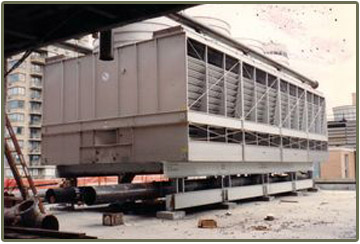
The image above comes from Completed Projects -- Hospitals/Research section of KSW's website.

Monday, August 18, 2008

The Strongest and Weakest Banks in America

Hat tip to Barry Ritholtz for this The "X"-List Report" (PDF) on the strongest and weakest banks in America. The list draws on data from the FDIC's Call Reports and the Office of Thrift Supervision's Thrift Financial Reports to rank banks and thrifts from strongest ("A") to weakest ("E"). Some of the "weak" ("D") and "very weak" ("E") banks are publicly traded, and could be candidates for selling short. Another idea might be a paired trade going short one of the weakest banks and going long one of the strongest. I haven't looked into these in detail yet, but here are the symbols of some of the "weak" and "very weak" publicly traded banks on this list, including one that's already in bankruptcy:

FCEN.OB

BCBF.OB

FMNTQ.PK

DSL

FDT

FLCM.OB

ITYC.PK

Saturday, August 16, 2008

"Dr. Doom"

Tomorrow's New York Times Magazine features an article by Stephen Mihm about NYU economist and author Nouriel Roubini, "Dr. Doom". On the real estate/mortgage bust, Roubini tells Mihm,

“You either nationalize the banks or you nationalize the mortgages,” he said. “Otherwise, they’re all toast.”


That seems a little hyperbolic. In a recent post ("America's Smartest Banker") we mentioned a few local banks that seem to have weathered the credit crunch fine, and are still making mortgage loans. Surely there are other local banks around the country that have been prudently run as well. In another recent post ("Profiting from the Credit Crunch/Real Estate Bust") we noted entrepreneurs in nearly opposite corners of the country making money by buying distressed mortgages. Why won't this sort of approach -- expanded as more seek profits in distressed mortgages -- eventually mop up most of the mortgage mess? Granted, when the dust settles, mortgages won't be as widely available as they were before to those with poor credit or those unable to make down payments, but a return to more rational lending standards will be a good thing for the financial system and the country as a whole.

Wednesday, August 13, 2008

Profiting from the Credit Crunch/Real Estate Bust

A friend and business associate directed my attention to this article in our local paper, The Record, about a couple of entrepreneurs, Jacob Benaroya and Danielle Brooks, that started a hedge fund to invest in distressed mortgages: "Firm finds value in bad loans". The partners founded the firm, Biltmore Capital, at the peak of the real estate boom three years ago. Excerpt:

Typically, Biltmore buys loans at about 50 cents on the dollar, although mortgages on truly distressed properties - for example, in Detroit - can be picked up for as little as 10 cents on the dollar.

[snip]

The eight-employee company expects to buy $100 million of mortgage debt in 2008. Benaroya said that could triple in 2009, as more subprime loans go bad. The company works in housing markets all over the nation, though the greatest concentration of bad loans is in the Rust Belt states, where the economy and job markets are troubled, and Florida, California, Arizona and Nevada, where there was a lot of overbuilding.

Although foreclosures have risen in New Jersey, they are nowhere near the rate in those distressed markets.

Ilan Kaufthal, a member of the board of Biltmore Capital, said he expects high returns in this business for the next year or two, because non-performing mortgages can be bought at such deep discounts.

"I think it's an extraordinary opportunity over the next few years for people who have the liquidity and cash to buy these mortgages," said Kaufthal, a former Bear Sterns executive who has also invested in Biltmore.


Last month, a similar article about entrepreneurs investing in distressed mortgages appeared in the OC Register, "Investor says only one road to foreclosure profit". Here's an excerpt from that article:

Robert Lee, a Huntington Beach-based investor in distressed home loans, says there is still plenty of pain ahead for the housing and mortgage markets.

Last year I shadowed Lee for a day and wrote a story about it. I had met him at a seminar and was impressed by his enthusiasm for investing in dud loans. Recently he and partner David Phelps have expanded their Web site foreclosuretrackers.com to cover all of Southern California as well as Clark County, Nevada. Last fall, the site just covered foreclosure filings in Orange County.

I quizzed Lee about the mortgage market, his business, and his prediction for a housing rebound. I have a feeling this interview will appeal more to housing bears than bulls.


That interview is worth reading.

Wednesday, July 30, 2008

Barrett Business Services Up 35% intra-day on Earnings Surprise

Barrett (Nasdaq: BBSI) is the staffing/PEO company that I described buying too early in the "Anatomy of a Mistake" section of the post "From Joel Greenblatt to Jim Rogers, Part III: The Importance of Macro Trends". Today it's up after announcing 2Q earnings of 29 cents per share after the close yesterday, beating the consensus estimate of 22 cents per share. The company also raised its guidance for Q3. These earnings are especially surprising given the CEO's bearish comments on the California labor market during the last conference call. On that call, he estimated that California (where the company does more than half of its business) had an unemployment rate of about 7.5%. I'm still down a lot from where I bought BBSI, but I am content to continue holding this one.

Tuesday, July 1, 2008

From Joel Greenblatt to Jim Rogers, Part III: The Importance of Macro Trends

The intent of this series of posts is to put my later posts about specific investment ideas in context, by describing the evolution of my thinking on investing over the last year and a half, as I've made mistakes and tried to learn from them. I'm going to break this up into a few posts, just to keep each post from being too long.

The Importance of Paying Attention to the Relevant Macro Trends

Another lesson I picked up over the last year and a half was the importance of paying attention to the relevant macro trends when evaluating potential investments. It's important to remember here that the Magic Formula is a backward-looking screening system: it uses trailing 12-month data to calculate earnings yield and return on invested capital, on the theory that, more often than not, trailing data are predictive of future performance. The impact of relevant macro trends can determine to what extent this will be true. For example, a wallboard company might have had impressive trailing twelve month earnings at the beginning of 2006, due to the residential construction boom that peaked during the previous year, but those trailing earnings wouldn't have been a good guide to its earnings during the construction bust to come. Below is an example of a mistake I made last year by not paying attention to the relevant macro trend.


Anatomy of a Mistake


I originally wrote the following postmortem on the GuruFocus website on April 24th. Since then, the stock is down a little bit more (it closed at $11.78 today), but otherwise nothing has changed materially.

Recently, I've written about the importance of acknowledging and addressing relevant macro-trends when evaluating investment opportunities. This doesn't mean that I think one should only invest in a company when the relevant macro-trends or macro-environment are in its favor; I would consider investing in a company facing negative macro-trends or a negative macro-environment if I thought those negative macro-trends were fully priced-in, or if I thought those negative macro-trends were nearing an end.


One example of an investing mistake I made by not paying attention to the relevant macro-trend was my investment in Barrett Business Services Inc. (BBSI) at $24.28 per share last year in my Magic Formula portfolio. Today BBSI closed at $12.50 per share.


Barrett is a staffing/PEO firm serving small and mid-sized businesses primarily. When I bought the stock last year, Barrett Business Services was fundamentally a solid company: no debt, lots of cash, a no-nonsense CEO who had steadily built the company up over 27 years and owned 25% of the company's stock, etc. That's all still true today, but nevertheless, it was a mistake to buy the company when I did, because I didn't consider the relevant macro-trend.


The relevant macro-trend in Barrett's case was the real estate bust in California. Although Barrett has operations in several regions of the country, and clients in different industries, most of its business comes from California. Because California experienced one of the biggest real estate booms in the country, it also is experiencing one of the biggest real estate busts, and the effects on California's economy have been worse than on the national economy so far (on today's conference call, Barrett's CEO estimated that California's unemployment rate is now about 7.5%). Also, during economic downturns, outsourced/temporary workers are often the first to get laid off, so Barrett was quick to feel the consequences of this (conversely, as Barrett's CEO pointed out on today's call, outsourced/temporary workers are also the first to get hired during an economic upturn).


Ideally, the best time to invest in a company like BBSI would be just as the negative macro-trend was ending, but of course there is no way to time that exactly. That doesn't mean, however, that I can let myself off the hook for buying BBSI when I did. The magnitude of the real estate bust in California was obvious at the time, and I should have connected the dots and realized how this would lead to a deterioration in California's labor market.


On today's conference call, Barrett's CEO discussed how he would be using this economic downturn (as he had used previous downturns) to increase market share and position Barrett to do well during the next economic upturn. I have no reason to doubt that. I would consider investing more in BBSI within the next few months, assuming it's still on the Magic Formula list. It was still a mistake for me to buy BBSI when I did though, at the beginning of the current downturn.


A counter example of a stock I bought last June that was facing a positive macro trend is the oil royalty trust BPT that I posted about here earlier today and last Friday. Not surprisingly, I am up 50%+ on BPT over the same time frame that I am down 50%+ on BBSI.